
For people living with dementia, the physical environment is part of the care. A well-designed space can reduce confusion and anxiety, encourage movement and social contact and make it easier for staff to provide attentive, respectful care. A poorly designed space can do the opposite.
Dementia is a general term for conditions, Alzheimer's disease the most common among them, that affect memory, thinking, communication and the ability to carry out everyday tasks. It affects each person differently and changes over time. Design cannot change the course of the condition. What it can do is make each day easier to navigate, make it simpler for residents to do things for themselves and give caregivers the room and time to respond with patience.
This explainer describes the principles that guide good memory care design and how UpManagement Hearth applies them with its operating partners. It is general information about design and operations, not medical advice.
Start with the person
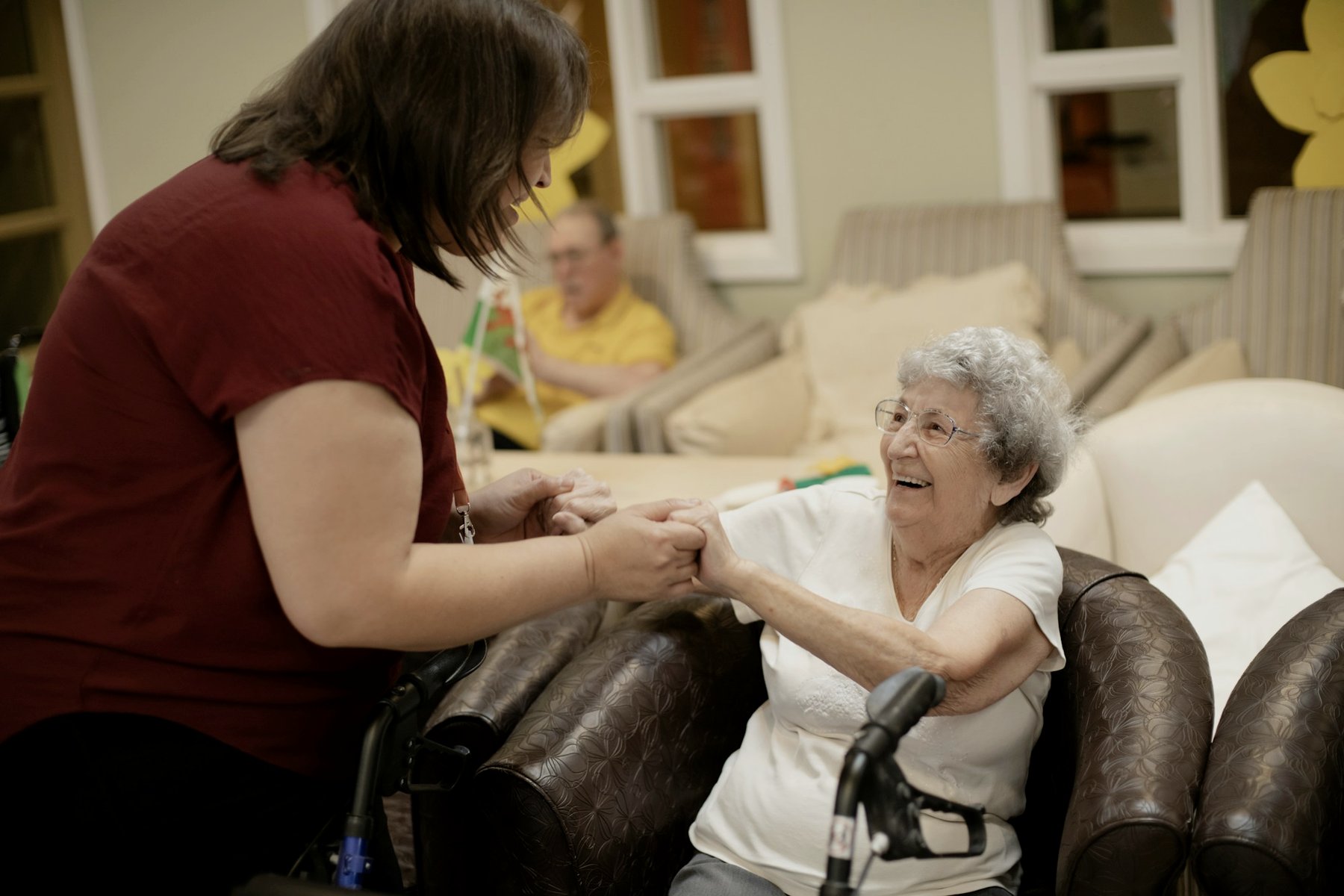
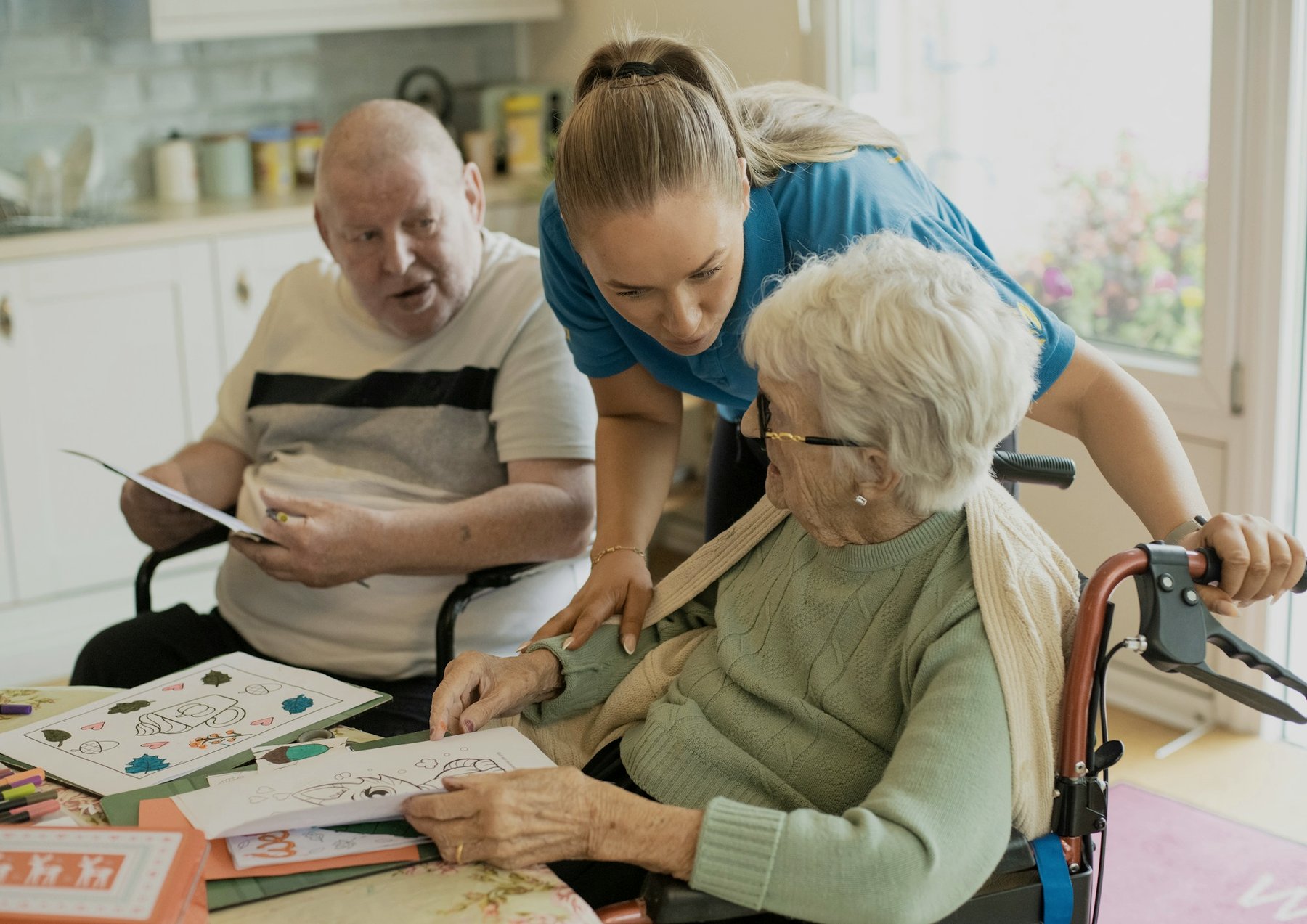
Good memory care design begins with the people who will live there. Residents are adults with long histories, settled tastes and their own ways of doing things. Many keep strong abilities alongside the ones they have lost: a love of music, a skill with their hands, a habit of setting the table or greeting visitors. A building should make room for those abilities rather than overlooking them.
That means spaces that feel like a home rather than an institution, with familiar furniture, domestic-scale rooms and personal belongings in each apartment. It also means giving residents real choices: where to sit, whether to join an activity, when to go outside. Choice supports dignity, and dignity is the measure against which every design decision should be judged.
Wayfinding
Long, identical corridors are disorienting. Memory care neighborhoods work better when they are small, with short circulation paths that loop back to shared spaces rather than ending at a locked door. Distinct colors, memory boxes outside each apartment and clear sight lines to common areas help residents find their way and give staff an easy view of the whole neighborhood.
A memory box, a small display case beside an apartment door holding photographs or keepsakes, can help a resident recognize their own front door when a number on the wall no longer does. Landmarks such as a distinctive piece of art, a reading nook or a view into the garden give residents reference points that are easier to remember than directions. Visual contrast helps too: a toilet seat that stands out against the floor, or a handrail that contrasts with the wall, is easier to find and use.
Some details work in the other direction. Highly reflective floors can look wet. Strong patterns or dark bands across a floor can look like a step or a hole. Busy wallpaper can be overstimulating. Designers who understand how dementia can affect perception choose calm, even surfaces and use contrast deliberately, where it helps.
Scale matters. Large, busy environments with many residents, many staff and constant activity can be overwhelming. Smaller neighborhoods, each with its own living room, dining area and kitchen, create a household that residents can come to know. Staff work consistently in the same neighborhood and get to know each resident's routines, preferences and signs of distress.
A good memory care neighborhood is small enough to know, and safe enough to explore. In a hypothetical community, that might mean two or more small households, each arranged around its own common space, rather than a single long wing. Each household can keep its own rhythm, and residents who need a quieter setting can find one.
A good memory care neighborhood is small enough to know, and safe enough to explore.
Small households also make mealtimes better. A dining table for a handful of residents is quieter and easier to follow than a large dining room, and it lets staff notice who needs encouragement, a different texture or a little more time. Eating well and drinking enough can be a challenge for some people living with dementia, and a calm, familiar setting is one of the simplest ways a building can help.
Light and the daily rhythm
Natural light supports orientation and sleep. Generous windows, outdoor access and lighting that follows the time of day can help residents keep a more regular daily rhythm, which can reduce restlessness in the late afternoon and evening.
Many caregivers recognize a pattern sometimes called sundowning, in which some people living with dementia become more confused, anxious or restless later in the day. Its causes are not fully understood, and its effects vary. A daytime routine with plenty of light and activity, and a calm, softly lit environment in the evening, is a widely used part of a thoughtful approach. Even lighting without dark corners or harsh glare also helps reduce shadows that can be misread.
Safe freedom
Security is essential in memory care, but it does not have to feel like confinement. Secured courtyards and gardens allow residents to go outside whenever they choose. Doors that staff need to control can be designed to draw less attention, while kitchens, activity spaces and garden doors are placed where residents are naturally drawn.
Walking is a natural and often comforting activity, and a building should make it safe rather than discourage it. A looped garden path that brings a resident back to the front door, raised planting beds at a comfortable height, shaded seating and familiar plants turn the outdoors into a place to spend time rather than a view through glass. Inside, a continuous walking route past points of interest can do the same.
Safety features should be built in quietly. Secured exits, monitored doors, slip-resistant surfaces, handrails and well-placed seating all reduce risk without announcing themselves. The aim is an environment where residents can move freely within safe boundaries, and where staff are not forced to choose between safety and independence.
Spaces that support staff
Care quality depends on staff being present and unhurried. Layouts that put supplies, charting and medication rooms close to residents' apartments reduce the time staff spend walking and increase the time they spend with people. Quiet rooms give both residents and staff a place to step away when a moment becomes difficult.
Open kitchens and dining areas let staff prepare food and drinks while staying in view of residents, which turns routine tasks into moments of connection. The sight and smell of a meal being prepared can also be a cue that it is time to eat. Laundry, storage and staff rest areas should be placed so that staff can reach them without leaving the neighborhood unattended for long.
Technology, used with care
Technology can help in memory care when it serves people rather than replacing them. Discreet monitoring can alert staff when a resident gets up at night or approaches a secured door. Digital care records can help staff on each shift understand a resident's preferences and recent changes. Family communication tools can keep loved ones informed and connected between visits.
Every system should be judged against privacy and dignity. Residents deserve not to feel watched, and families deserve clear explanations of what is monitored and why. The best technology is often the least visible: it runs in the background, reduces routine burdens on staff and frees more of their time for direct care.
Simple, familiar objects often matter more than advanced systems. A clock that shows the day and whether it is morning or evening, a radio that plays music from a resident's younger years or a photo album that a caregiver can page through together can all offer comfort and connection. Good design leaves room for these things.
Common design mistakes
Many problems in memory care come from treating it as a standard assisted living floor with a locked door. A few mistakes appear again and again:
- Long double-loaded corridors with identical doors and dead ends.
- Outdoor space that is hard to reach, unsecured or used only on staff-led outings.
- Large dining rooms that are noisy and confusing at mealtimes.
- Staff stations placed out of sight of common areas.
- Finishes chosen for appearance alone, without regard to glare, contrast or patterns that can be misread.
What families can look for on a tour
Families evaluating memory care can learn a lot by watching how a neighborhood works. Are residents engaged, or are they waiting? Can they reach the garden on their own? Do staff speak to residents by name, at eye level and with patience? Is the neighborhood calm, or loud and crowded? It is also reasonable to ask what dementia-specific training staff receive, how routines are personalized and how the community communicates with families when something changes.
Design with the operator
At UpManagement Hearth, memory care design starts with the care operator's program, not with a standard floor plan. The operator's experience of how residents and staff use a space every day is the best guide to how that space should be built.
Hearth plans the real estate and the care model together from the first sketch, with experienced operators who bring clinical and operational depth. It integrates technology for wellness monitoring, operations and family communication, and it measures every community on the same monthly standard across the UpManagement platform. The purpose behind all of it is the same: environments where people living with dementia can feel at home, move with some freedom and receive care that respects who they are.
Published by UpManagement. This article is general information about the sectors in which the UpManagement companies operate. It is not legal, tax, investment or compliance advice, and it is not an offer to sell or a solicitation of an offer to buy any security. Where a company is described as a platform in formation, its approvals are not yet in place.