
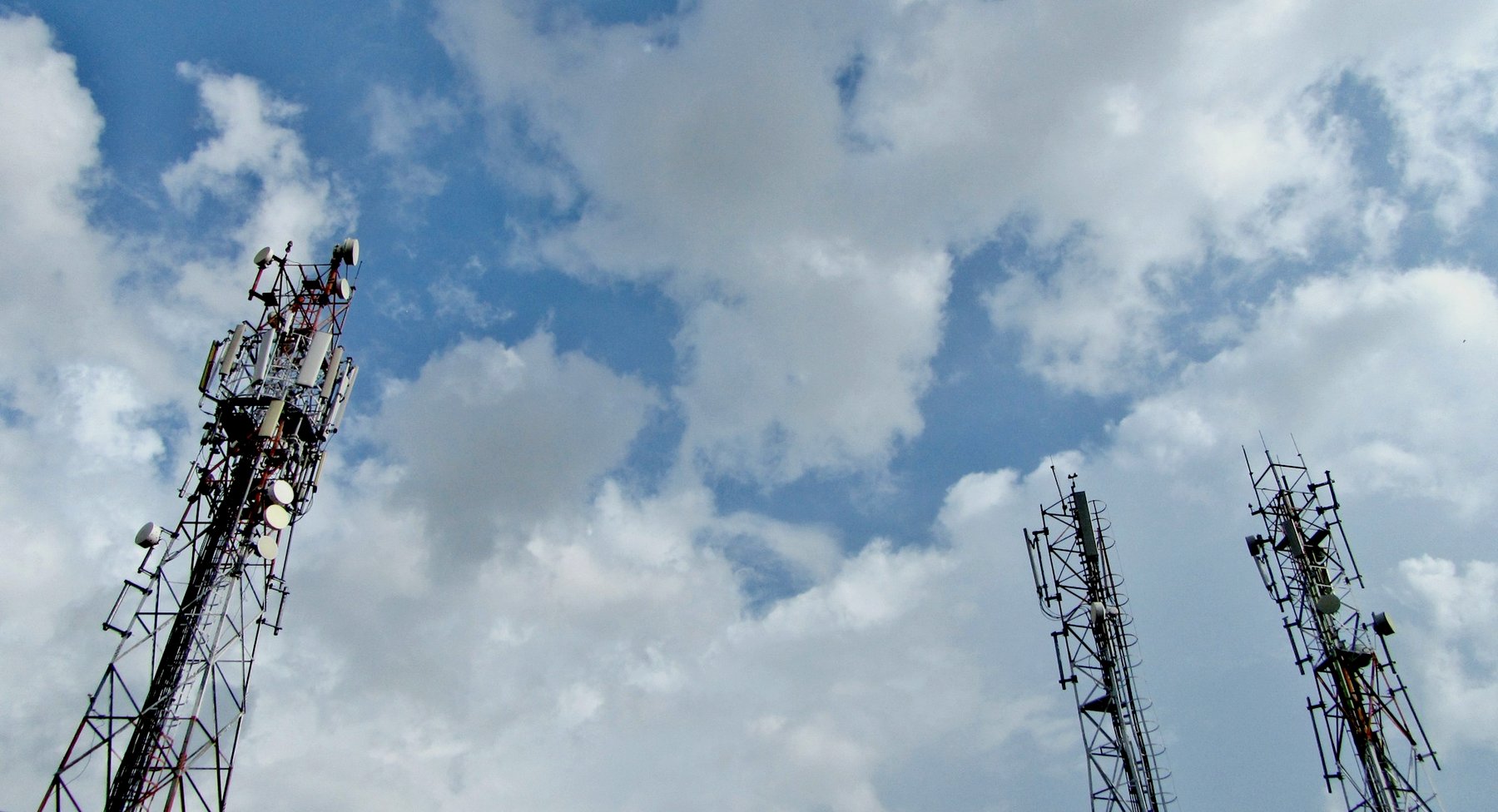
A communications tower is a simple structure with an unusual business model. The owner builds or acquires the site and then leases space on it, along with ground space for equipment, to wireless operators and other users. The economics depend on one variable more than any other: how many tenants share the structure.
This explainer walks through how a tower site makes money, why additional tenants matter so much, what makes tower revenue durable, and what can go wrong. The mechanics are not complicated, but they reward careful underwriting and patient operation.
What a tower site is
A tower site is more than a steel structure. It includes the land rights, whether owned outright or held under a ground lease. It includes the compound at the base, where tenants place equipment cabinets or shelters, along with power service, backup power in many cases, fencing and an access road or easement.
Structures come in several forms. Monopoles are single tubular poles, common where appearance matters. Lattice towers are self-supporting steel frameworks that can carry heavy loads. Guyed towers use cables anchored to the ground to reach greater heights at lower cost but need more land. Rooftop sites and other attachments, such as water tanks, serve the same purpose in dense areas where a new tower is impractical.
Tenants are mostly wireless operators, but sites can also host fixed wireless providers, public safety networks, utilities, broadcasters and private radio users. Each brings its own equipment, power needs and lease terms.
Why operators lease instead of build
A wireless operator could, in principle, build and own every site it needs. Most choose not to for many of their sites. Building a tower takes time, and the slowest part is often not construction but finding land, negotiating rights and working through local zoning and permitting. An operator trying to fill a coverage gap or add capacity usually wants to be on air sooner than a new build allows.
Capital matters too. Operators spend heavily on spectrum, radios and network equipment. Leasing space on an existing structure lets them direct that capital to the parts of the network that differentiate their service, rather than to steel and land. Local governments, for their part, often prefer one shared tower to several competing structures, and many zoning codes encourage or require collocation for that reason.
These forces are what make shared infrastructure work. The same structure can serve several competitors, and each of them is better off sharing it than building alone.
The first tenant pays for the site
Building a tower requires land rights, zoning and permitting, the structure itself, power and access. Most of those costs are incurred once. A single anchor tenant's lease is often enough to cover them over time, but with only a modest return.
That is why new towers are usually built with an anchor tenant committed in advance, often in an area where an operator has identified a coverage or capacity need. The anchor lease reduces the risk of the build. It does not, on its own, make the site a strong investment.
Additional tenants change the picture
Each additional tenant adds revenue with relatively little added cost: perhaps some structural work, additional ground space and power. Because the major costs are already covered, much of that new revenue flows through to the owner. A tower with several tenants can be a very different investment from the same tower with one.
To see why, consider a hypothetical site. Assume the ground rent, maintenance, insurance and property taxes are roughly the same whether one operator or three are on the structure. With one tenant, the lease covers those costs and a return on the build. With a second tenant, nearly all of that new rent is margin. With a third, the site's cash flow can be several times what it was with one tenant alone, on essentially the same asset. The first tenant pays for the site. Each tenant after that changes what the site is worth.
The first tenant pays for the site. Each tenant after that changes what the site is worth.
Revenue can also grow without new tenants. When an existing tenant adds antennas, upgrades to new technology or needs more ground space, the lease is typically amended and the rent rises. Over the life of a site, these amendments can add meaningfully to income, especially during network upgrade cycles.
Long leases, steady escalators
Tower leases are typically long, with built-in annual increases and renewal options. Operators rarely move equipment once it is installed, because doing so would mean finding a new site, getting new approvals and risking coverage gaps. That makes the revenue unusually durable compared with most real estate.
Escalators are written into the lease, either as a fixed percentage or tied to an index. Renewal terms are usually at the tenant's option, which gives operators flexibility, but in practice a well-located site is hard to leave. Relocating equipment costs money, takes time and can degrade service to customers in the meantime.
Durable does not mean guaranteed. Operator mergers can lead to network consolidation, where two operators that each leased space on nearby towers decommission one set of equipment. Lease language around termination, consolidation and amendments matters, and it should be read closely before a site is acquired.
What to watch
Several factors determine whether a site will hold its value and add tenants over time:
- Ground rights: towers on leased land carry the risk of rising ground rent or an expiring lease.
- Structural capacity: a tower that cannot carry more equipment cannot add tenants.
- Zoning: some sites are hard to replicate, which protects them; others face new competition.
- Operator consolidation: fewer operators can mean fewer potential tenants.
- Location and demand: a site where traffic is growing will attract tenants more readily than one where it is flat.
Ground rights deserve particular attention. A tower on leased land is only as secure as the ground lease beneath it. Owners often seek to extend ground leases well beyond tenant lease terms, or to buy the land or a perpetual easement outright, so the site's income is not exposed to a landowner's decision years from now.
Structural capacity is the other common constraint. A tower designed for a single tenant may need reinforcement before it can carry more equipment. That work is usually economic when a new tenant is ready to sign, but it requires an accurate structural analysis and a clear understanding of what the tower can support. The rule is simple. A tower that cannot carry more equipment cannot add tenants.
Location and demand tie these factors together. A site in a growing suburb, along a busy highway corridor or near a new industrial or data center campus is more likely to see new tenants and amendments than a site serving a stable or shrinking population. Underwriting should look at where traffic is heading, not only where it has been.
A tower that cannot carry more equipment cannot add tenants.
Operating discipline
Towers look passive, but running them well takes steady work. Each new installation or modification requires a structural analysis. Sites need regular inspection, maintenance of the structure, grounding and compound, and attention to access and security. Taller structures may require obstruction lighting and marking under Federal Aviation Administration rules, and that lighting has to be monitored and repaired promptly.
Responsiveness to tenants also matters. Operators are deciding where to place equipment on tight timelines. An owner that processes applications quickly, keeps accurate site records and can tell a tenant exactly what a structure will support is more likely to win the next lease than one that cannot.
Common mistakes follow from neglecting this work: buying sites with short ground leases and no plan to extend them, relying on outdated structural records, or underinvesting in site maintenance until a problem forces the issue.
Build, buy or both
There are two ways to grow a tower portfolio. Building new sites with an anchor tenant adds infrastructure where it is needed and can earn attractive returns as tenants are added, but it takes time and carries zoning and permitting risk. Acquiring existing sites brings in revenue immediately, but price reflects the current tenancy, so the opportunity lies in sites with room to add tenants that the seller has not captured.
Many owners do both. Either way, the underwriting comes back to the same questions: how secure are the land rights, how much can the structure carry, how strong is local demand, and what will it take to add the next tenant.
How Span evaluates a site
UpManagement Span evaluates every site on these factors before it buys or builds, and operates its sites with a view to adding tenants over time. The value of a tower is not only what it earns today, but what it could support tomorrow.
Span's model is built on leasing space on tower sites and in-building assets to operators, supplemented by managed services, monitoring and value-added connectivity. It works as a neutral owner, open to any operator, which is what makes multi-tenant economics possible. Every site reports into UpManagement's monthly standard alongside the group's other companies, so uptime, safety, margin and capital spend against plan are visible to leadership the same week each month. That discipline is what turns a single-tenant tower into a long-term asset.
Published by UpManagement. This article is general information about the sectors in which the UpManagement companies operate. It is not legal, tax, investment or compliance advice, and it is not an offer to sell or a solicitation of an offer to buy any security. Where a company is described as a platform in formation, its approvals are not yet in place.